The site
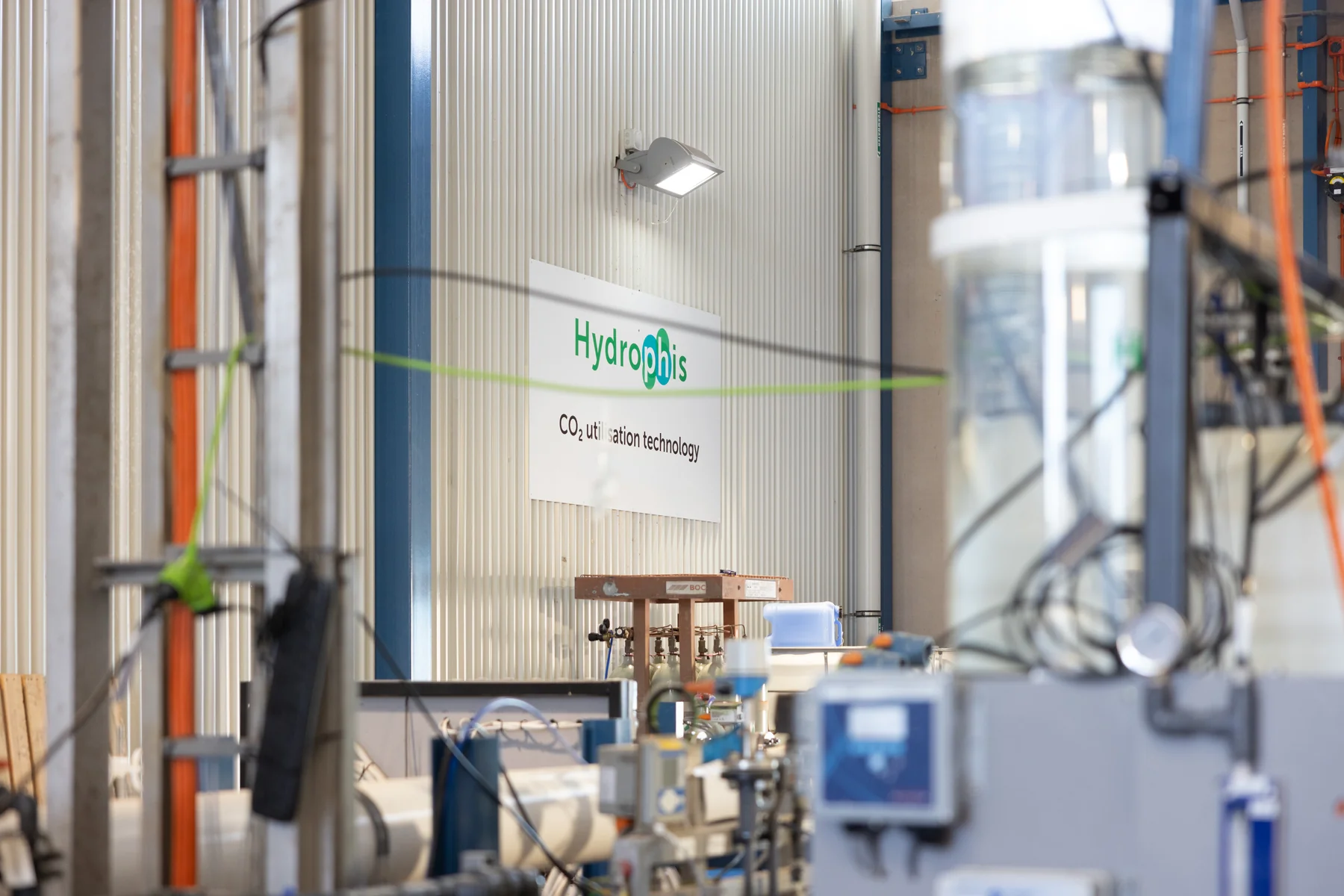
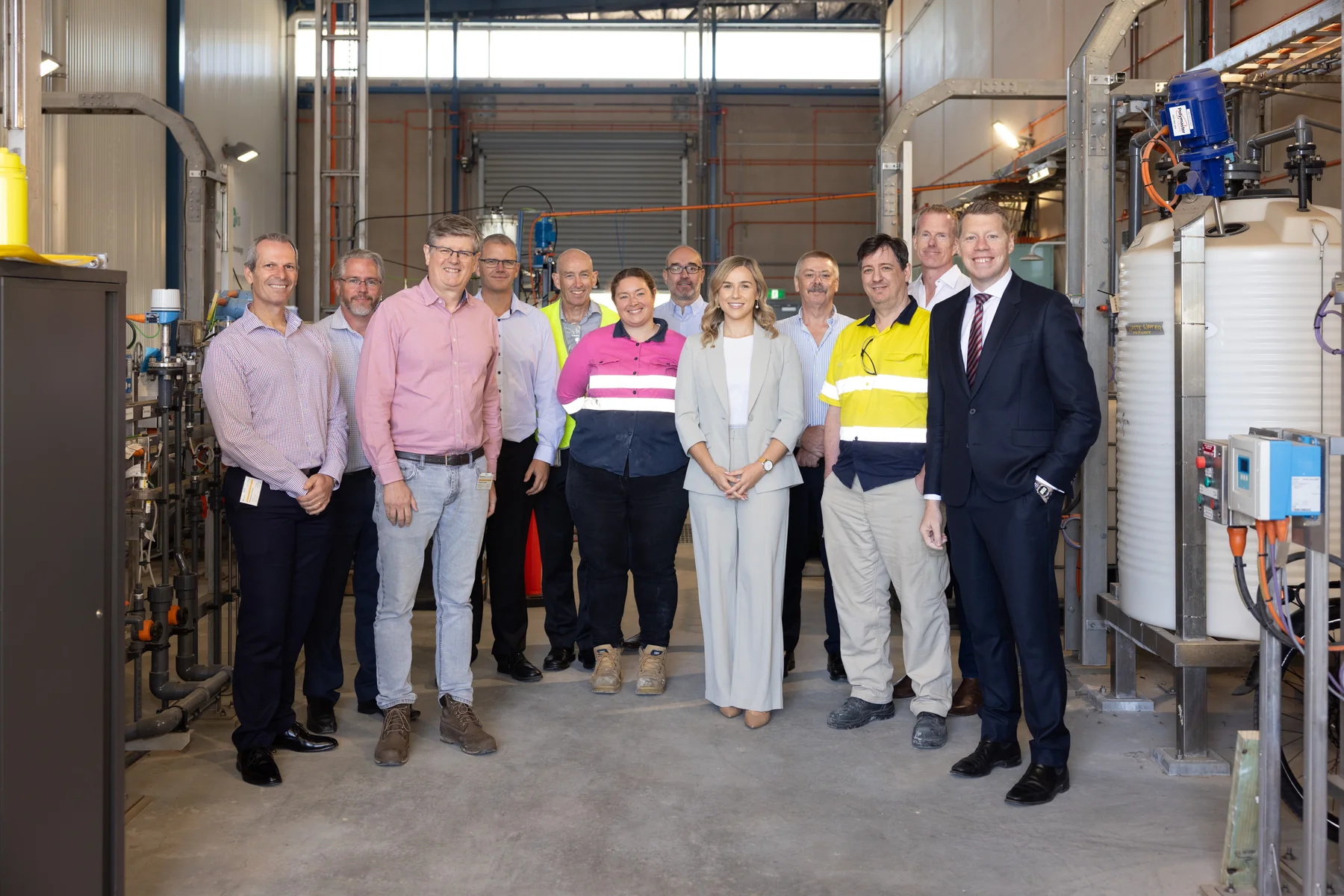
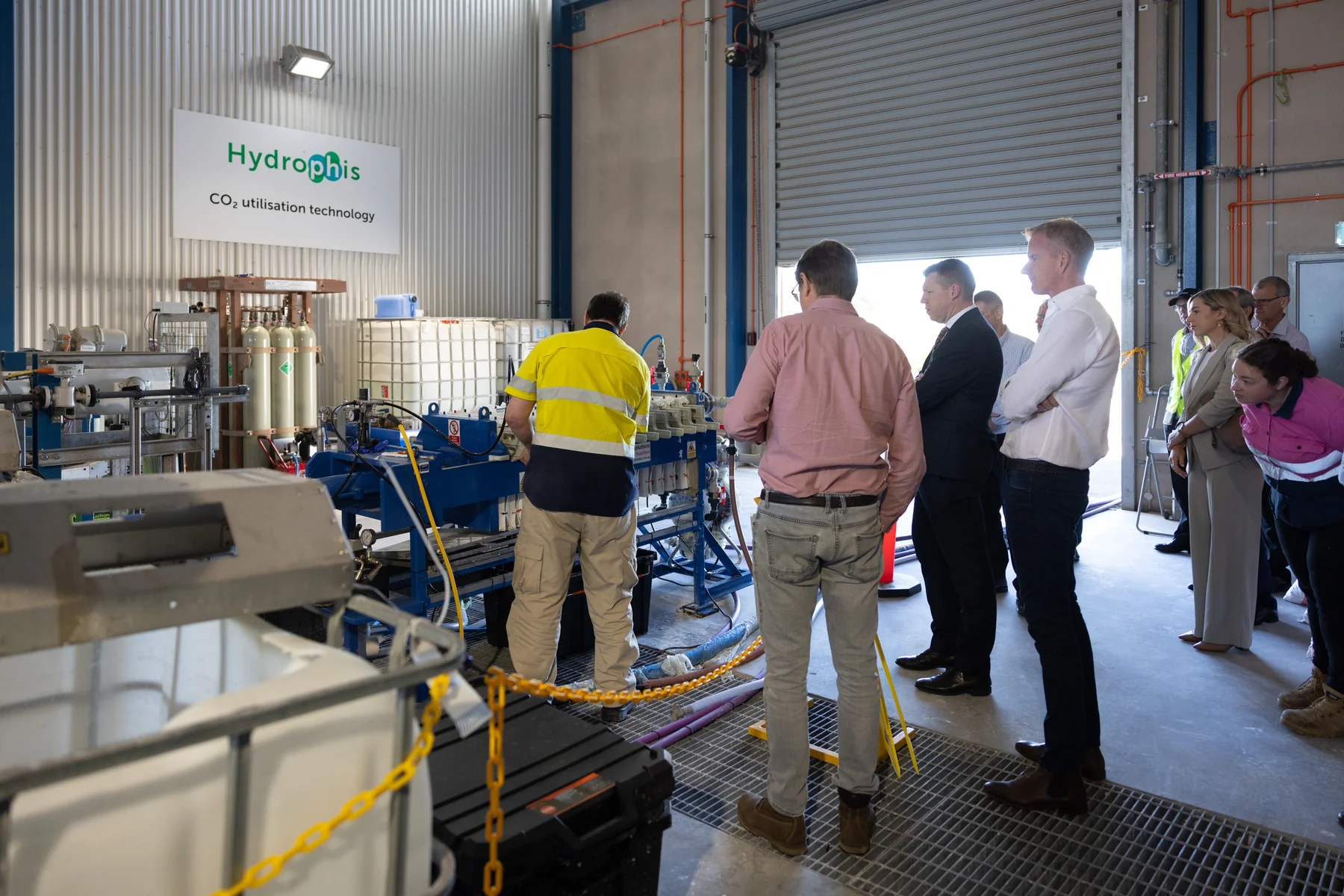
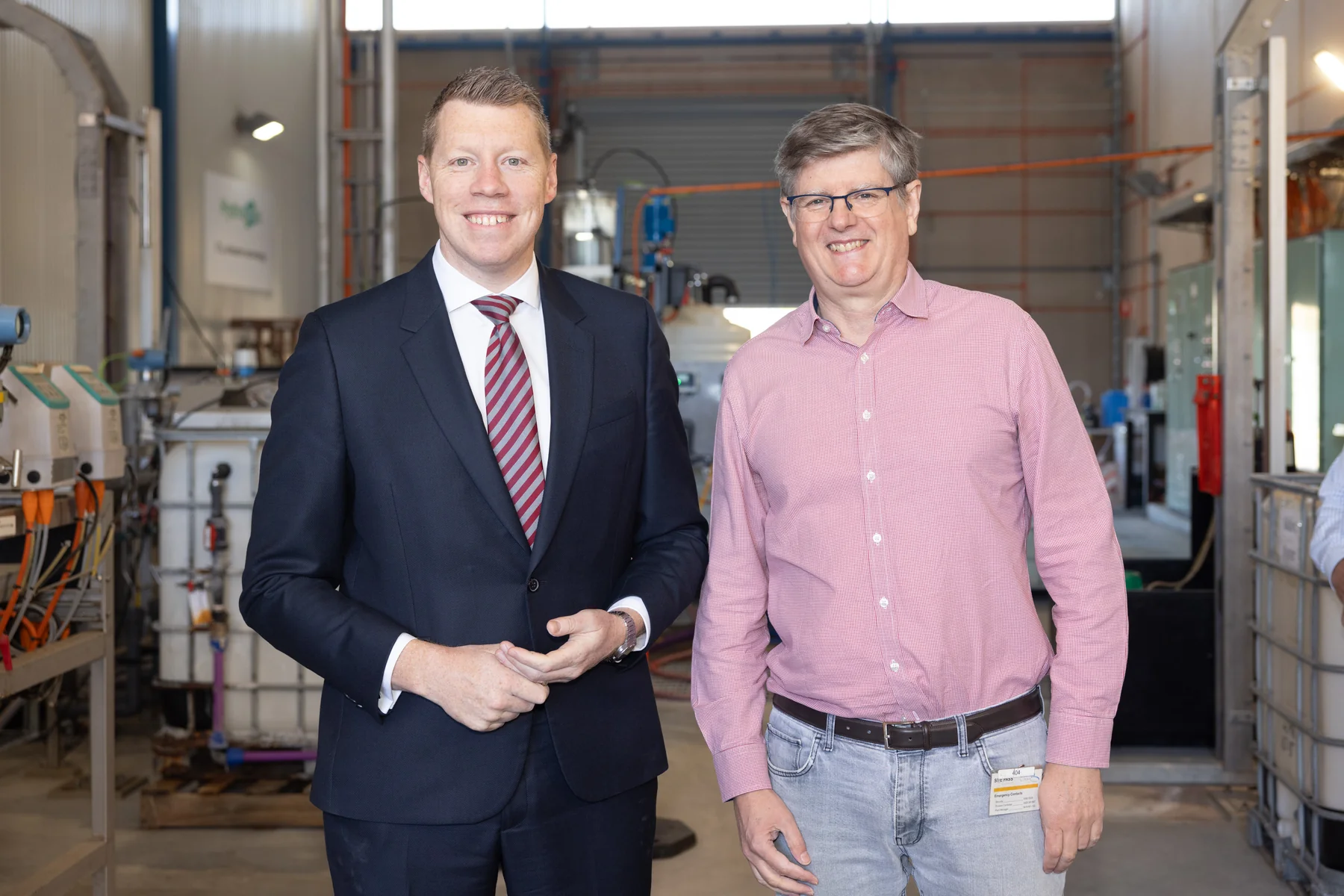
Adelaide Desalination Plant, Lonsdale, South Australia. The plant produces potable water via reverse osmosis desalination.
The material
The reject brine stream contained elevated calcium and magnesium. These hardness ions represent an operational constraint and cost (scaling, pumping energy, discharge limits) but are, in Hydrophis’ view, a valuable resource.
What we did
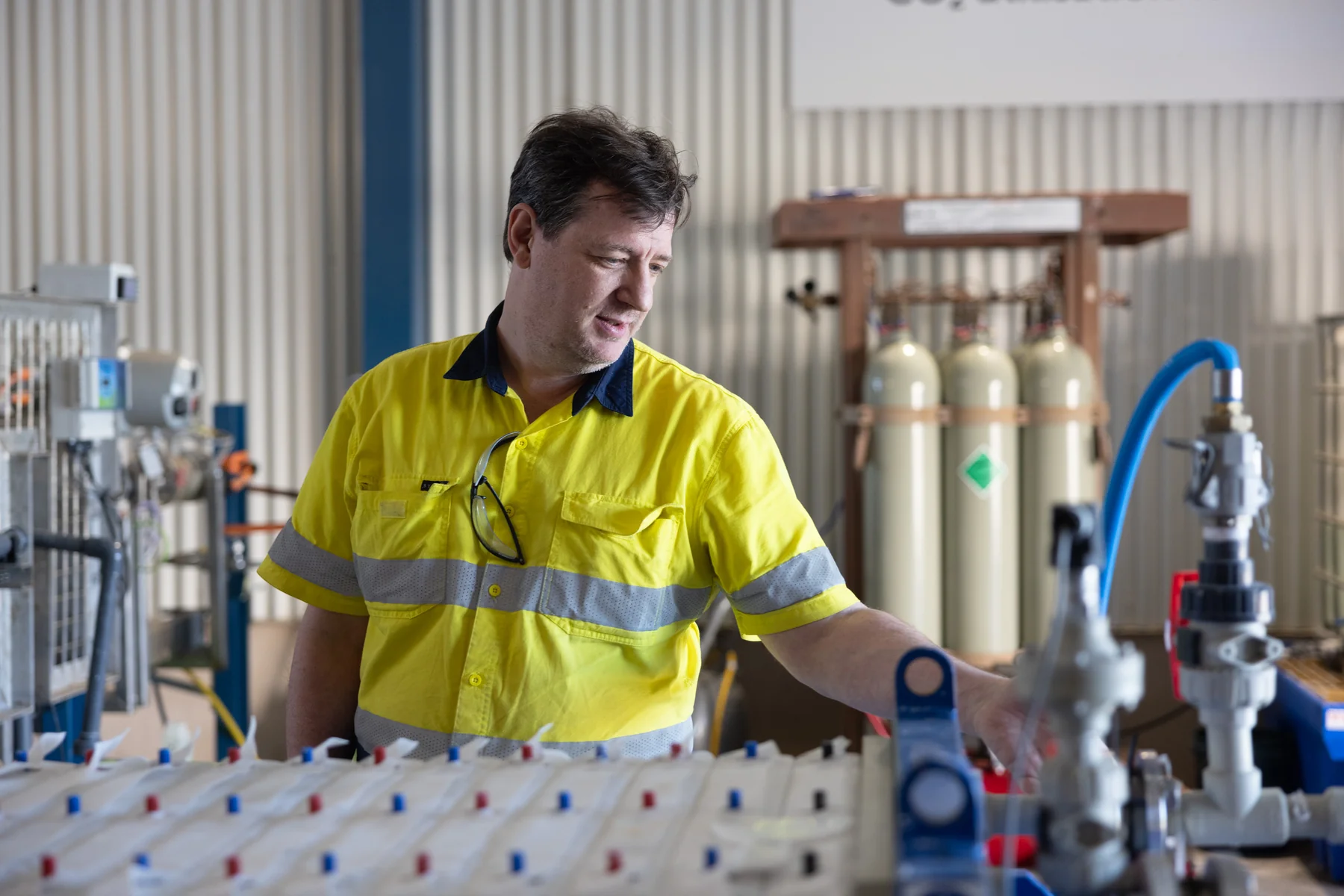
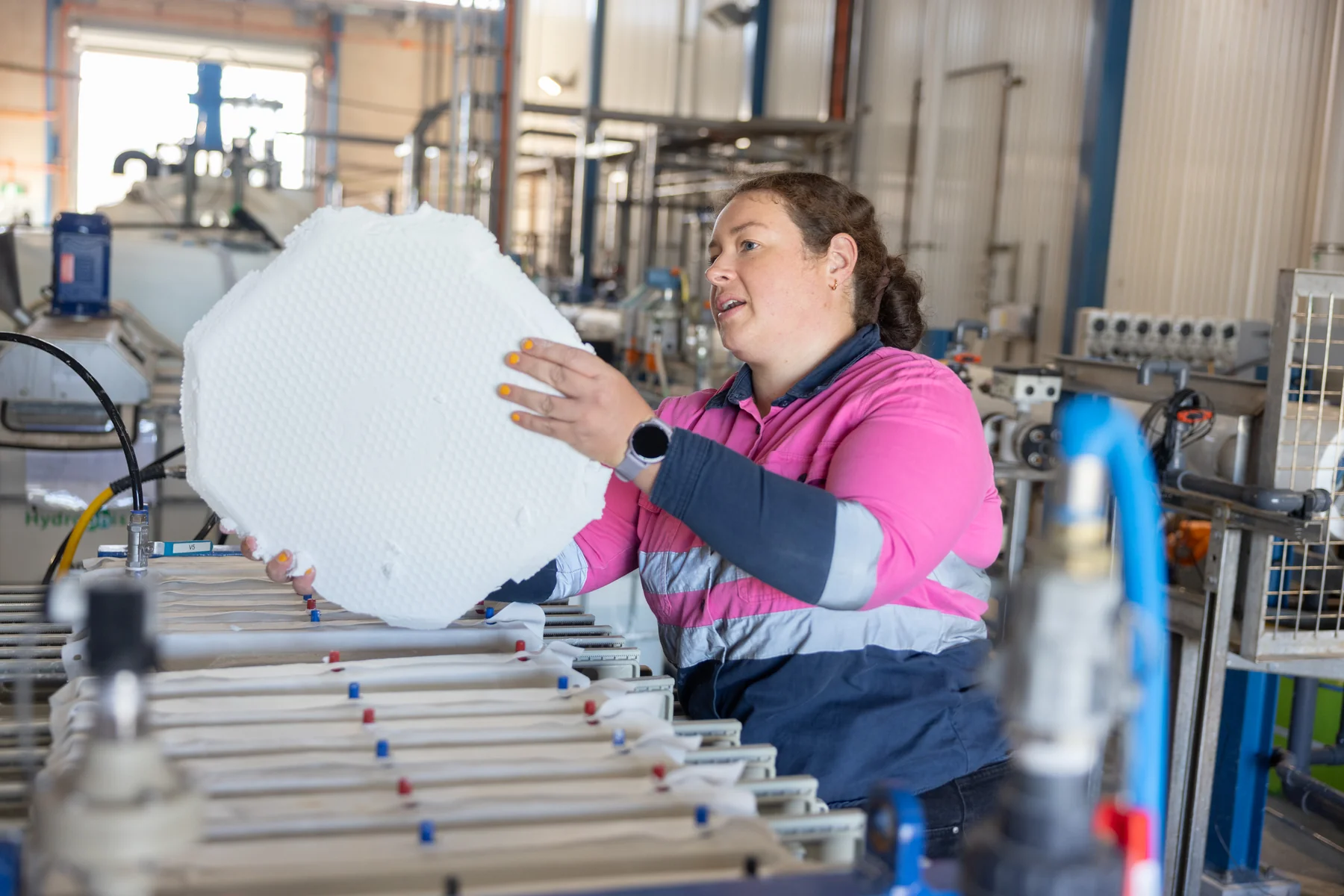
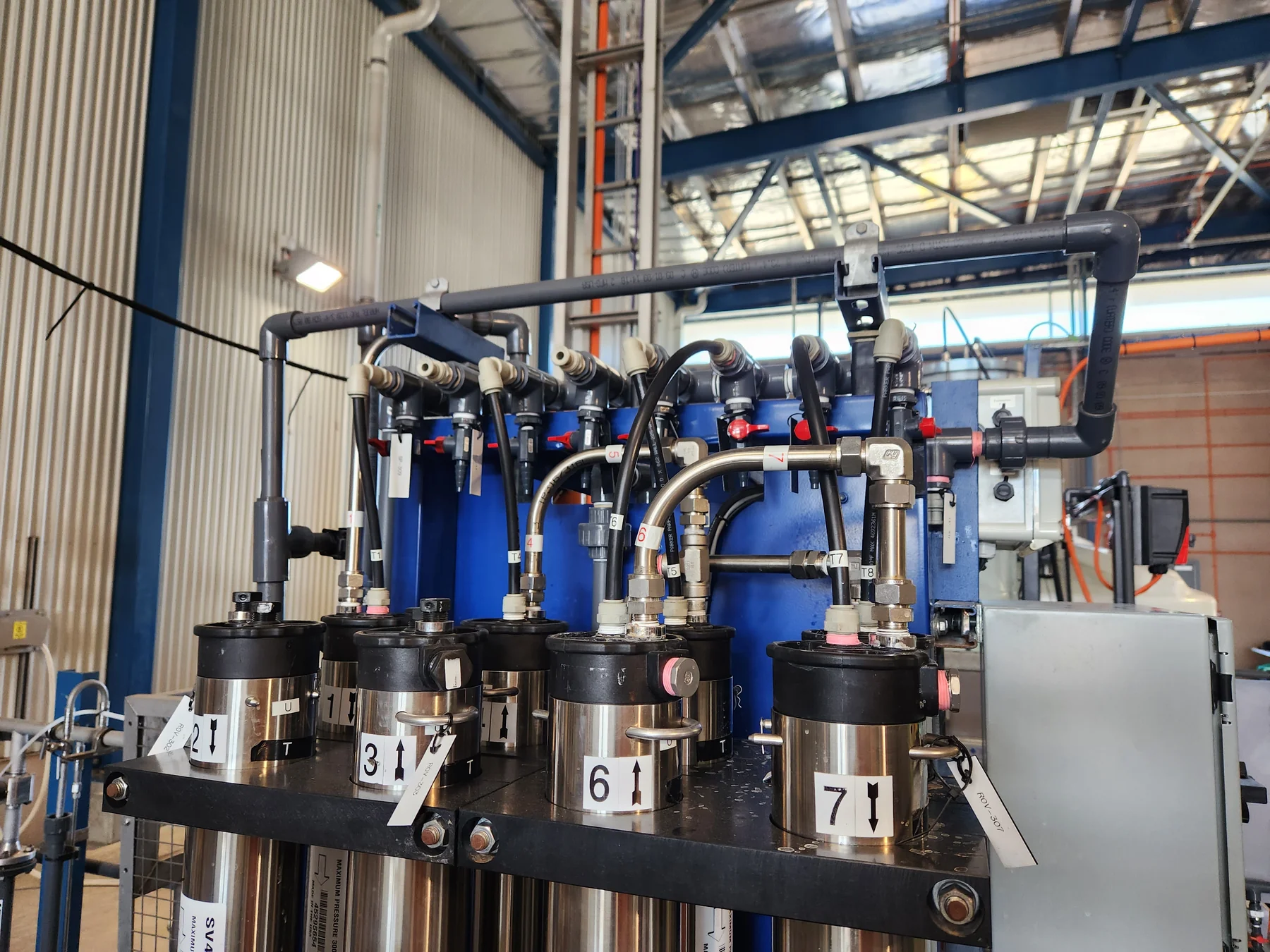
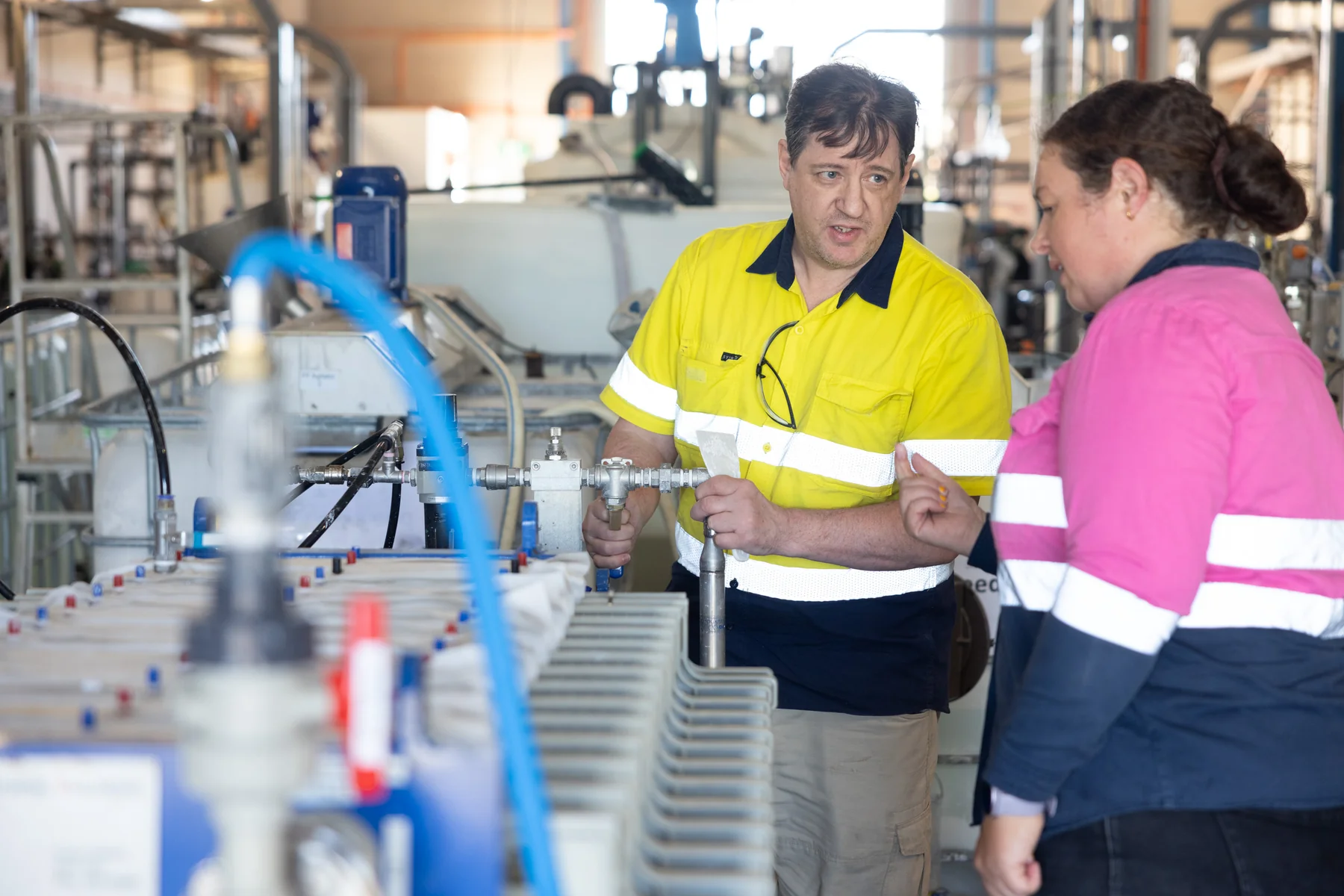
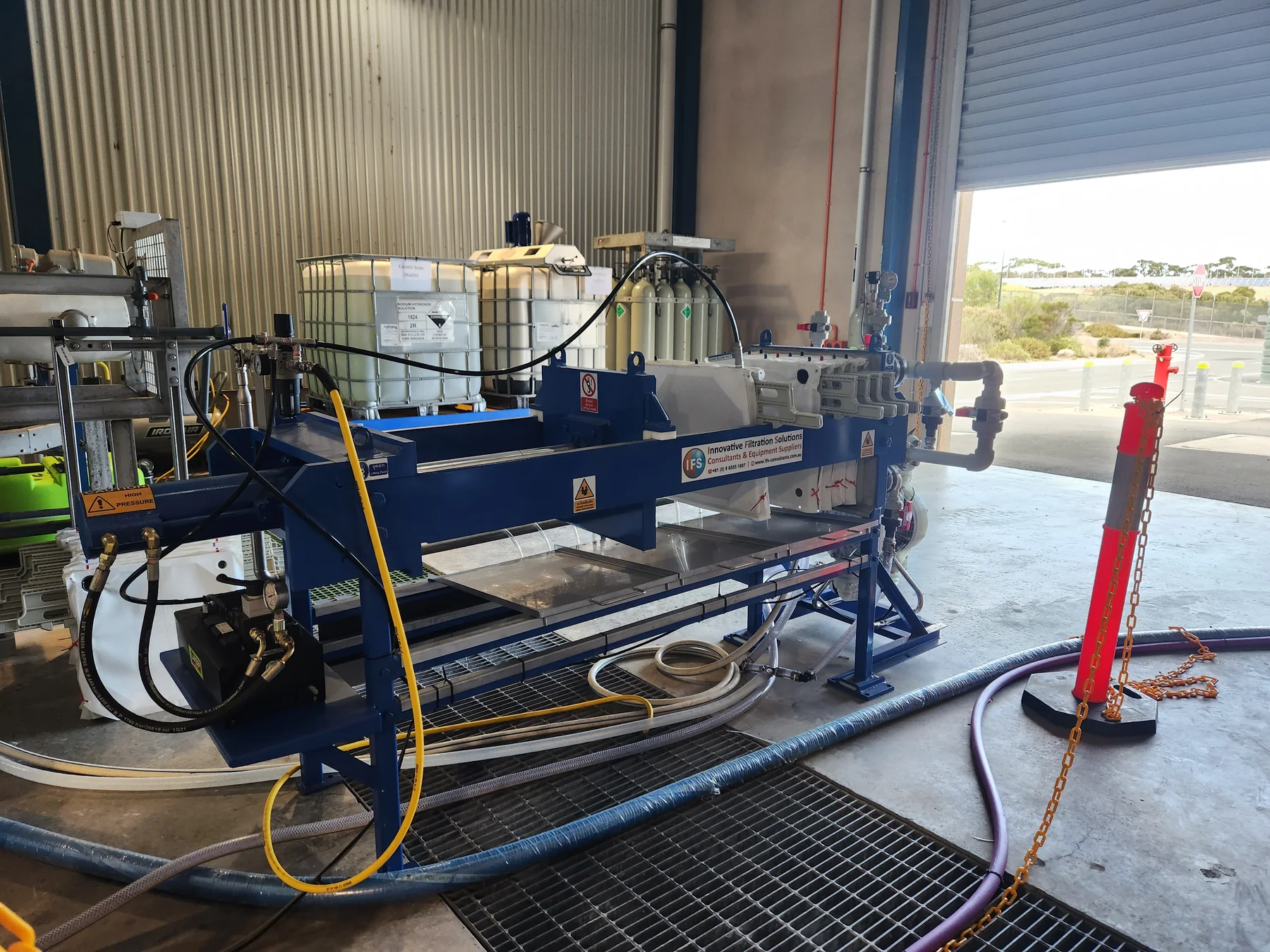
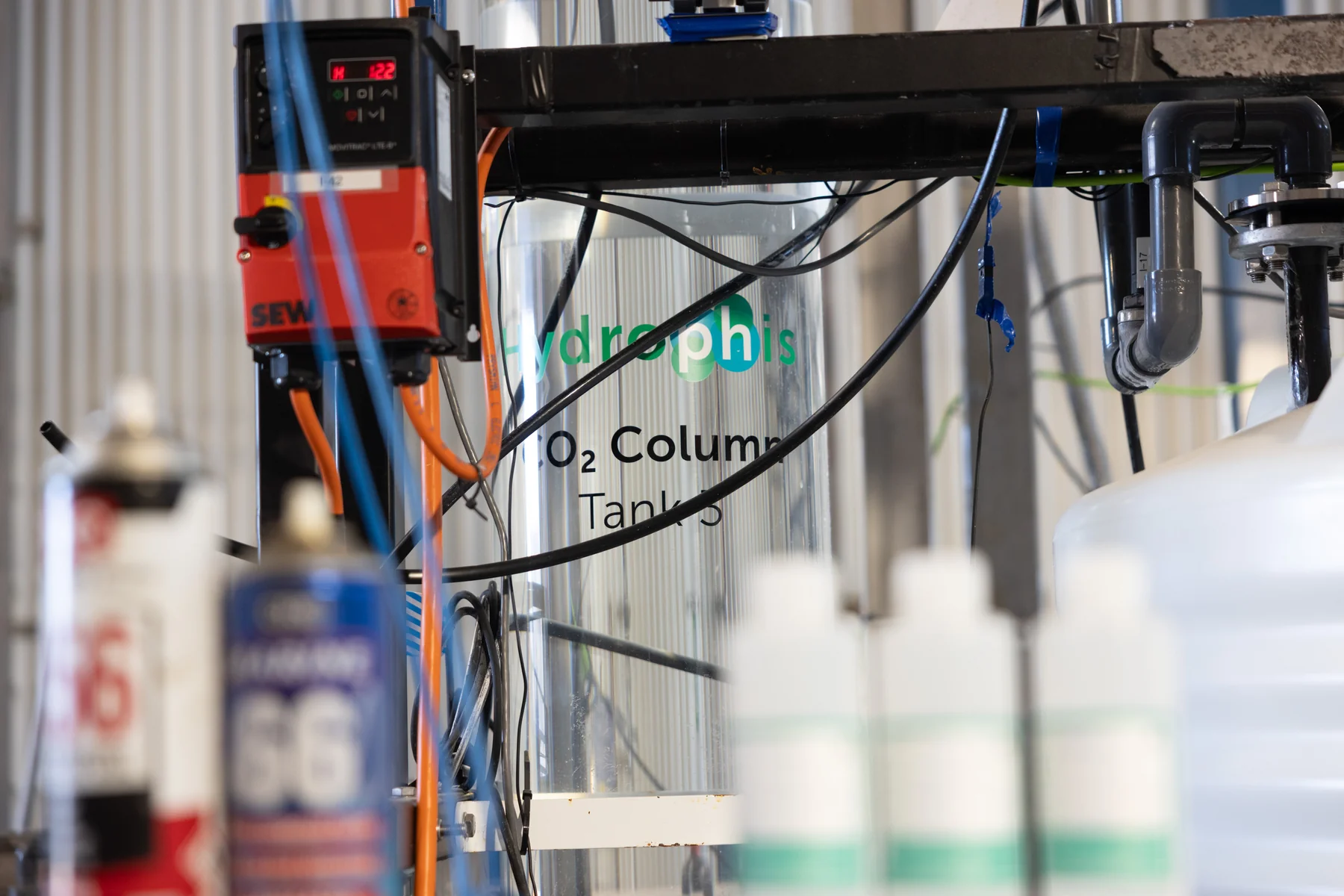
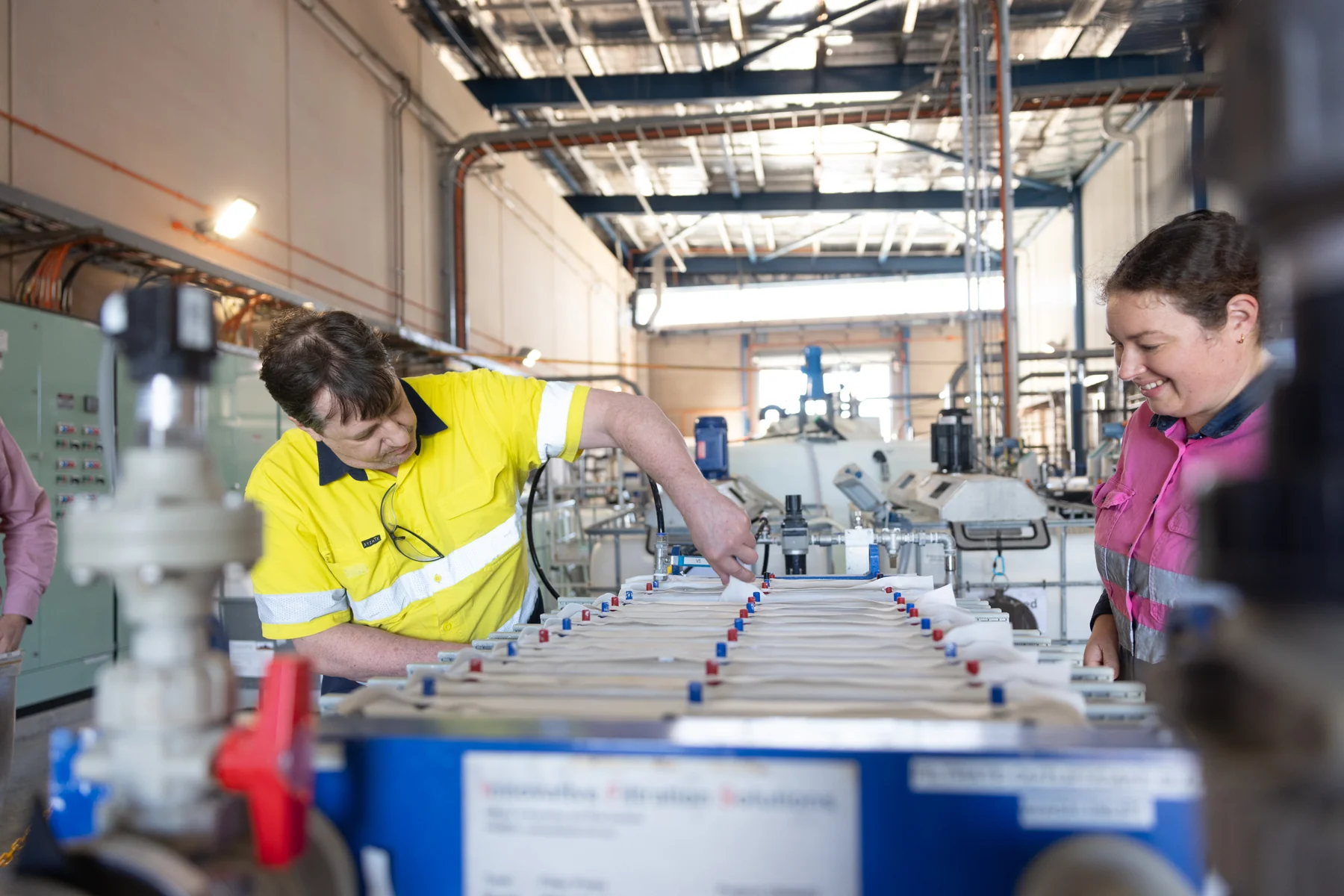
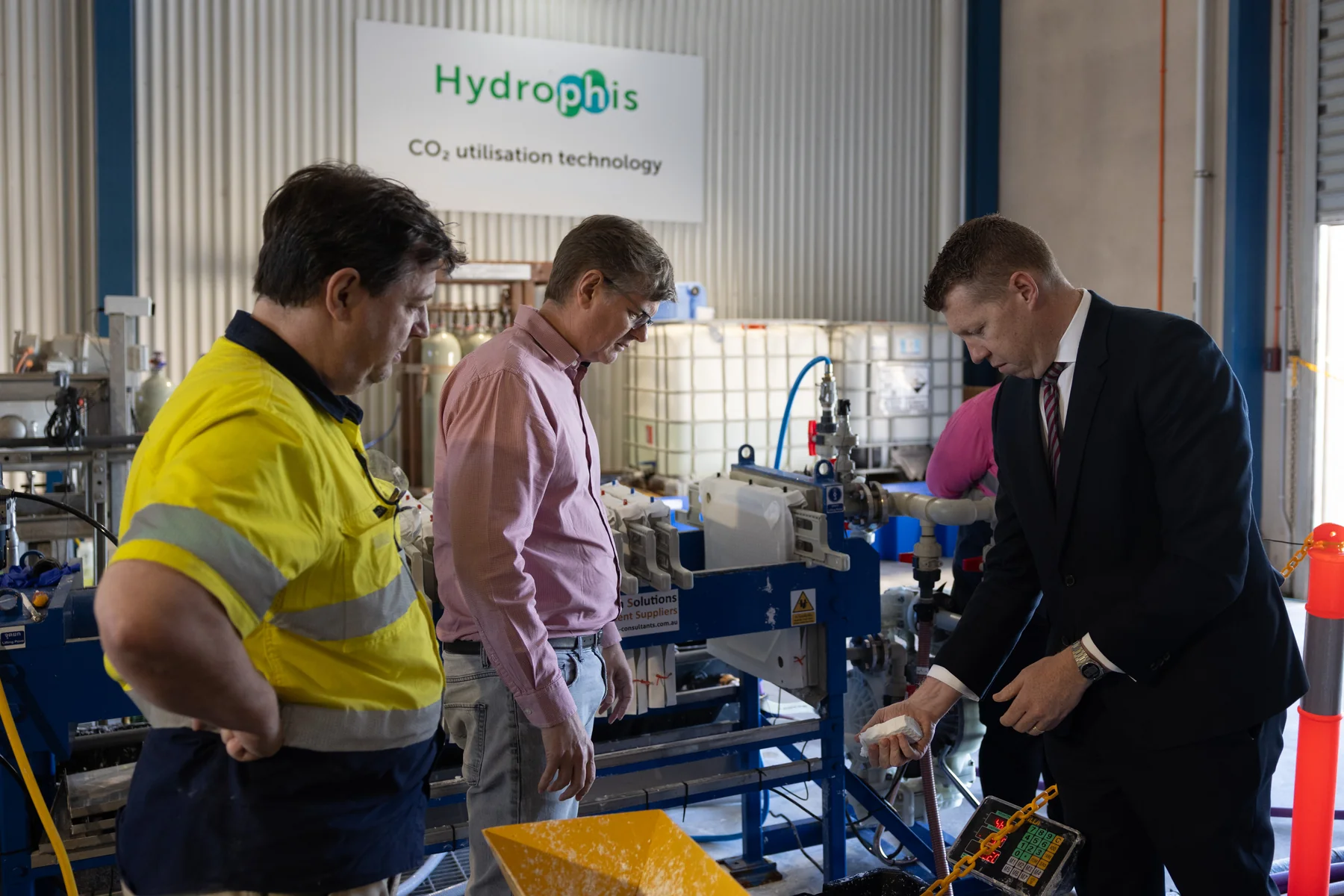
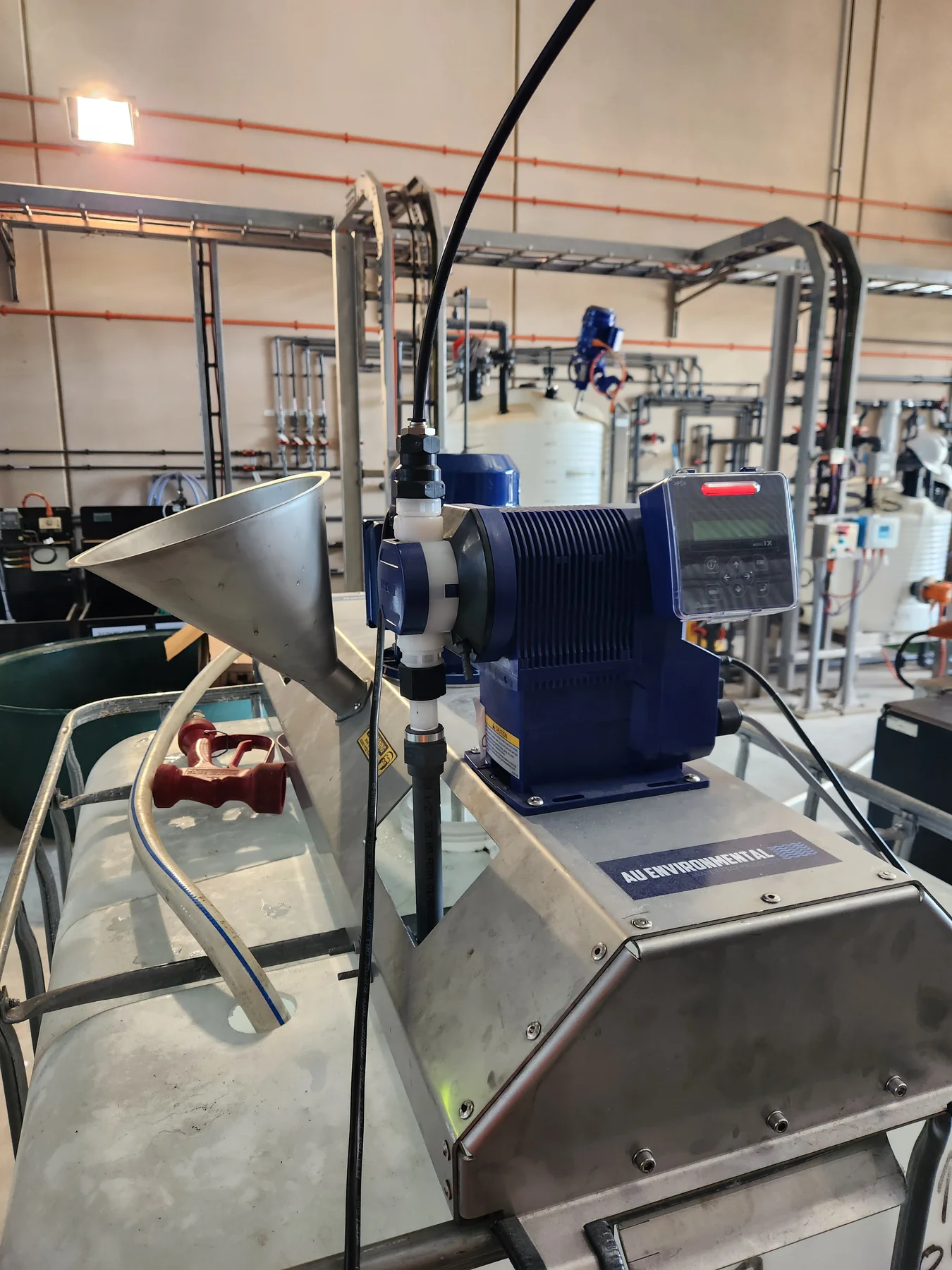
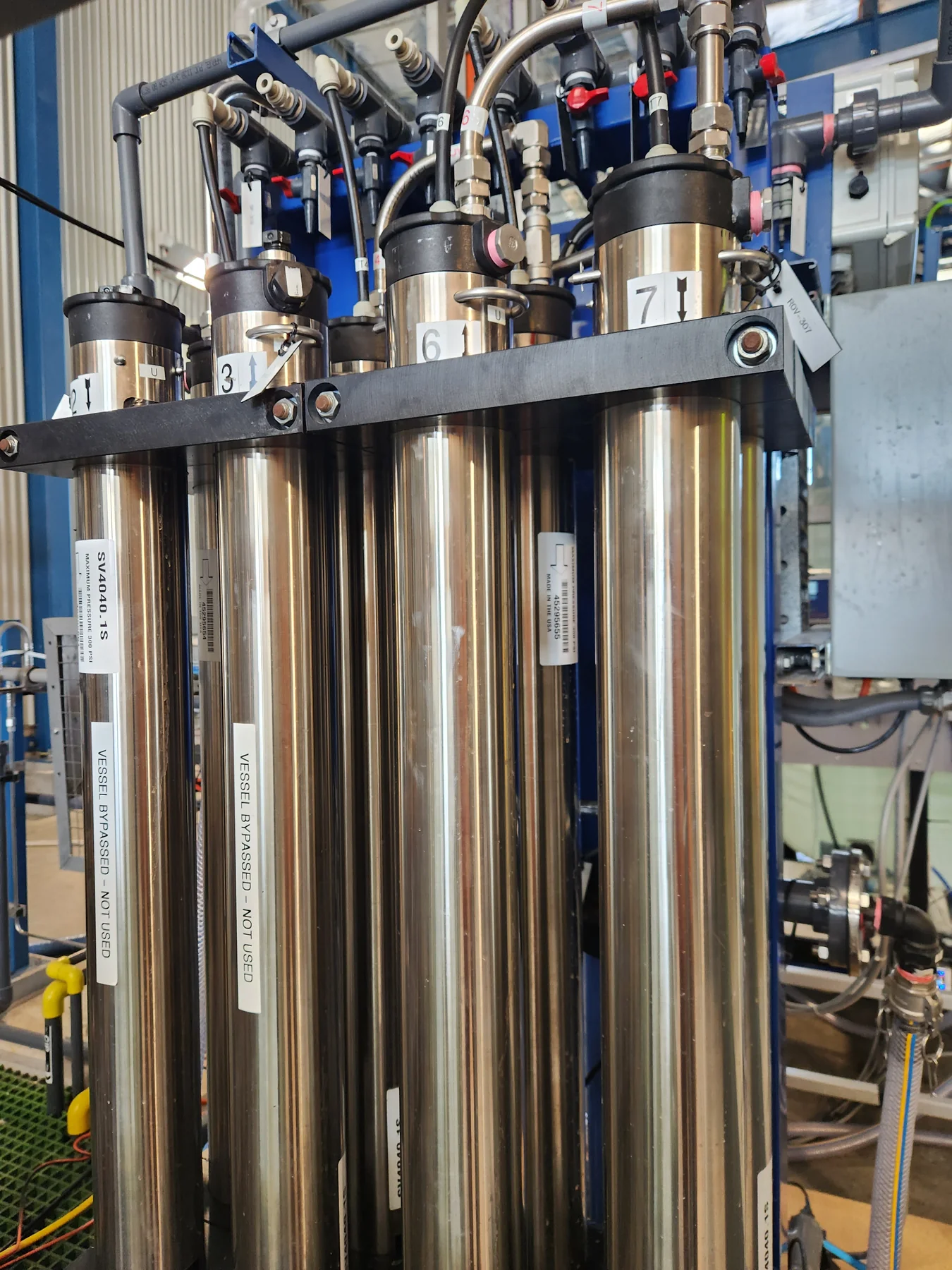
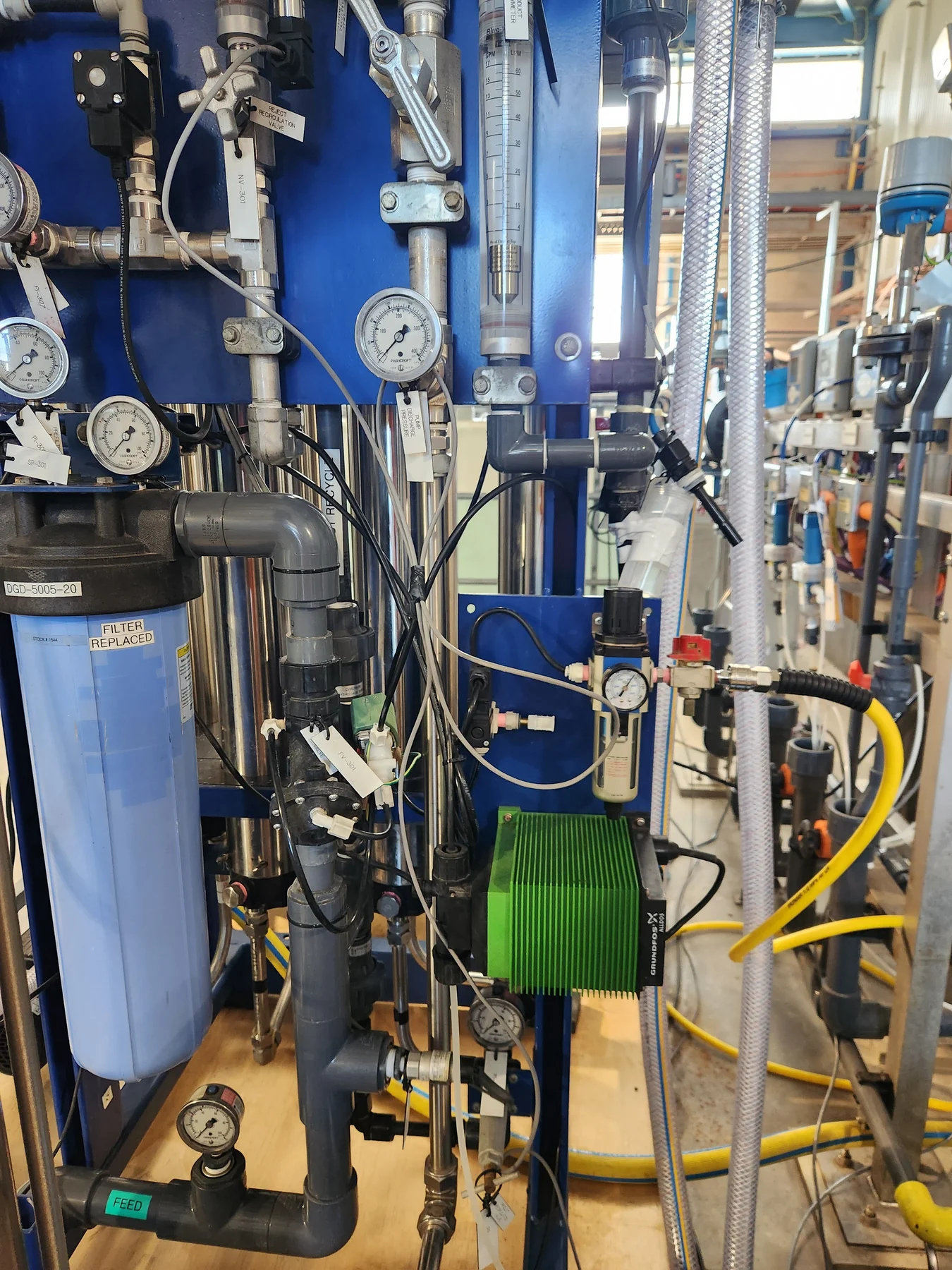
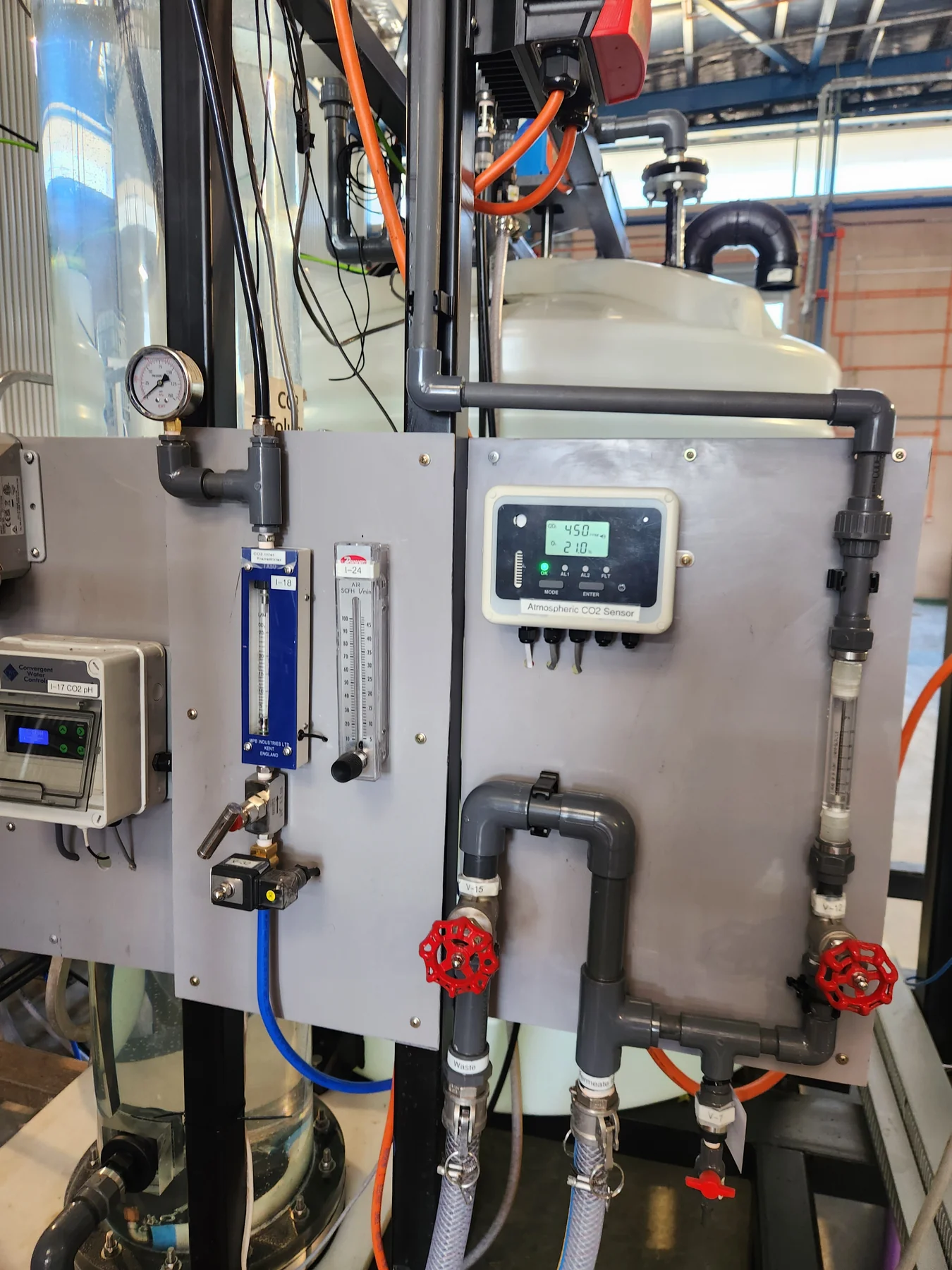
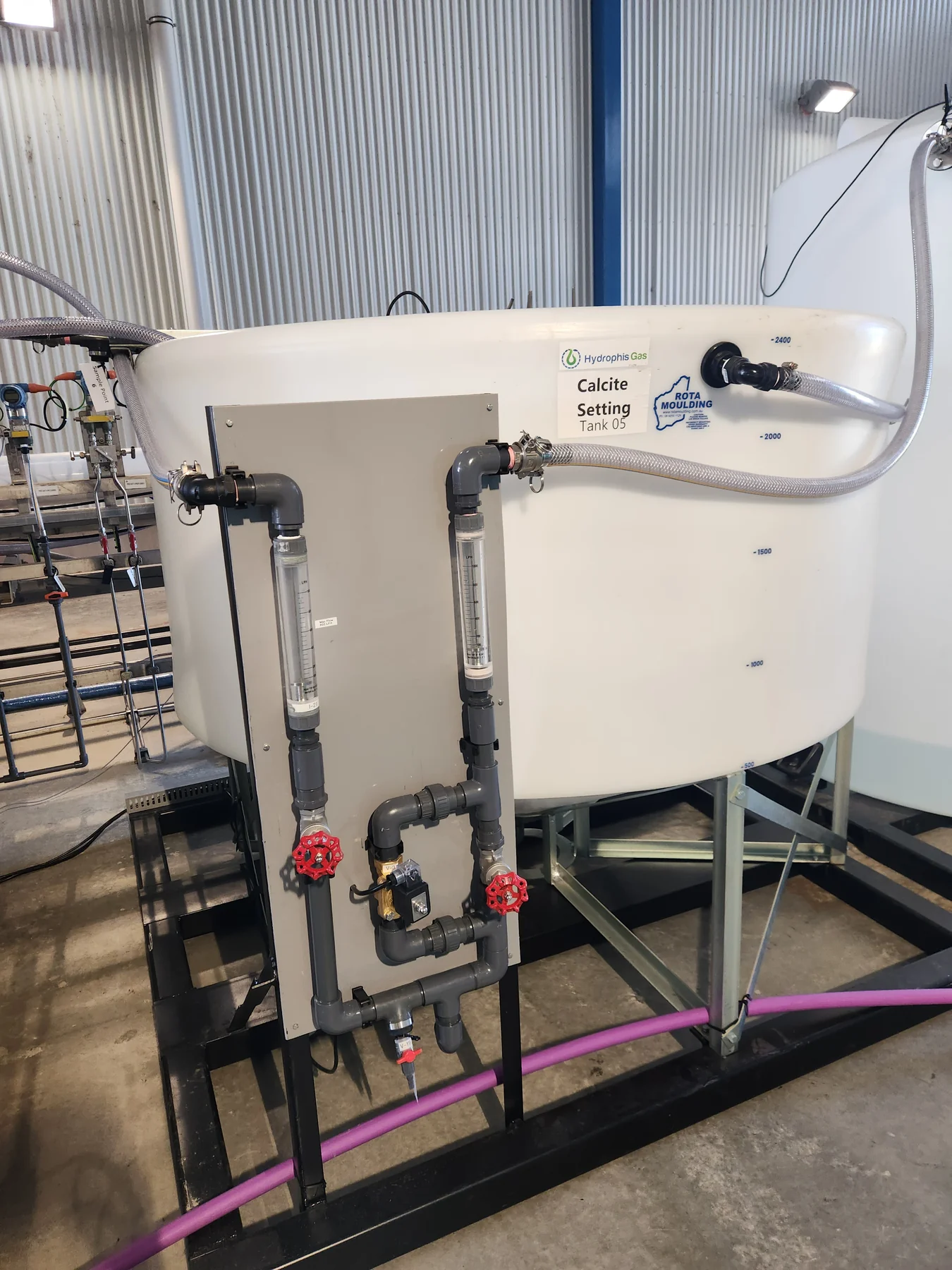
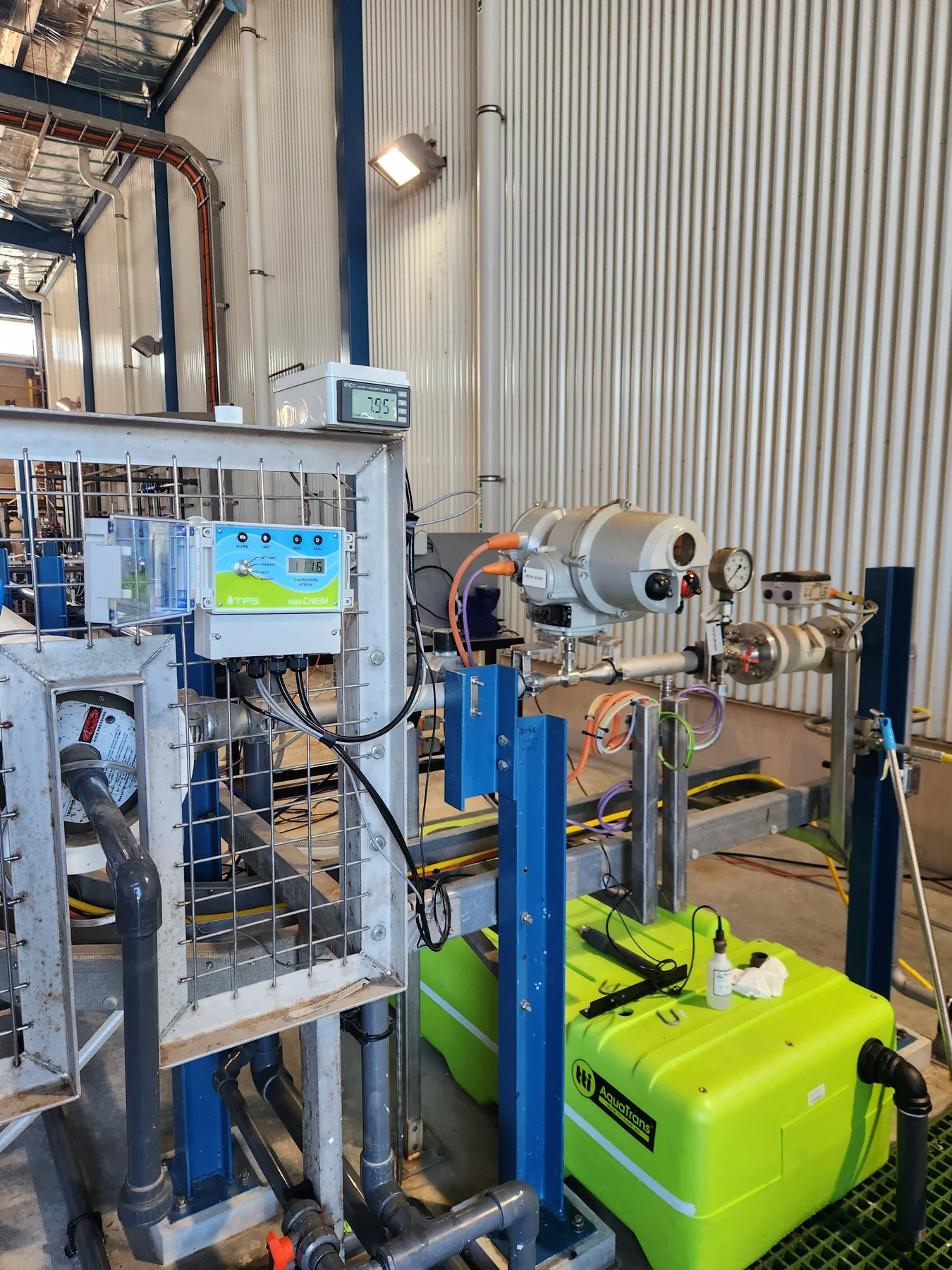
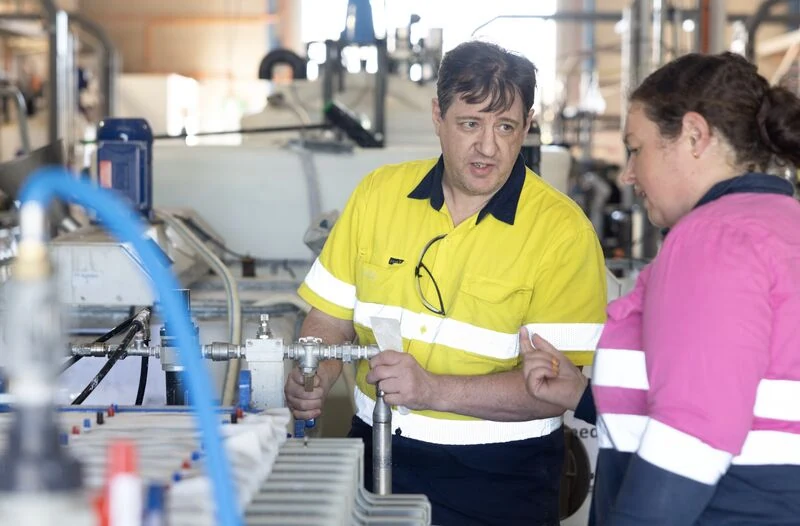
Hydrophis ran four pilot campaigns over two years (March 2023–May 2025) on our 30 m³/day rig, working on live industrial brine under actual plant conditions and Environmental Protection Agency supervision. The process uses pH-swing chemistry: CO₂ as the acid and water as the reaction medium, operating at ambient temperature and pressure with no crystalliser or thermal stage. Calcium carbonate, magnesium carbonate and magnesium hydroxide outputs can be optimised per client, and we can also produce magnesium oxide.
What came out
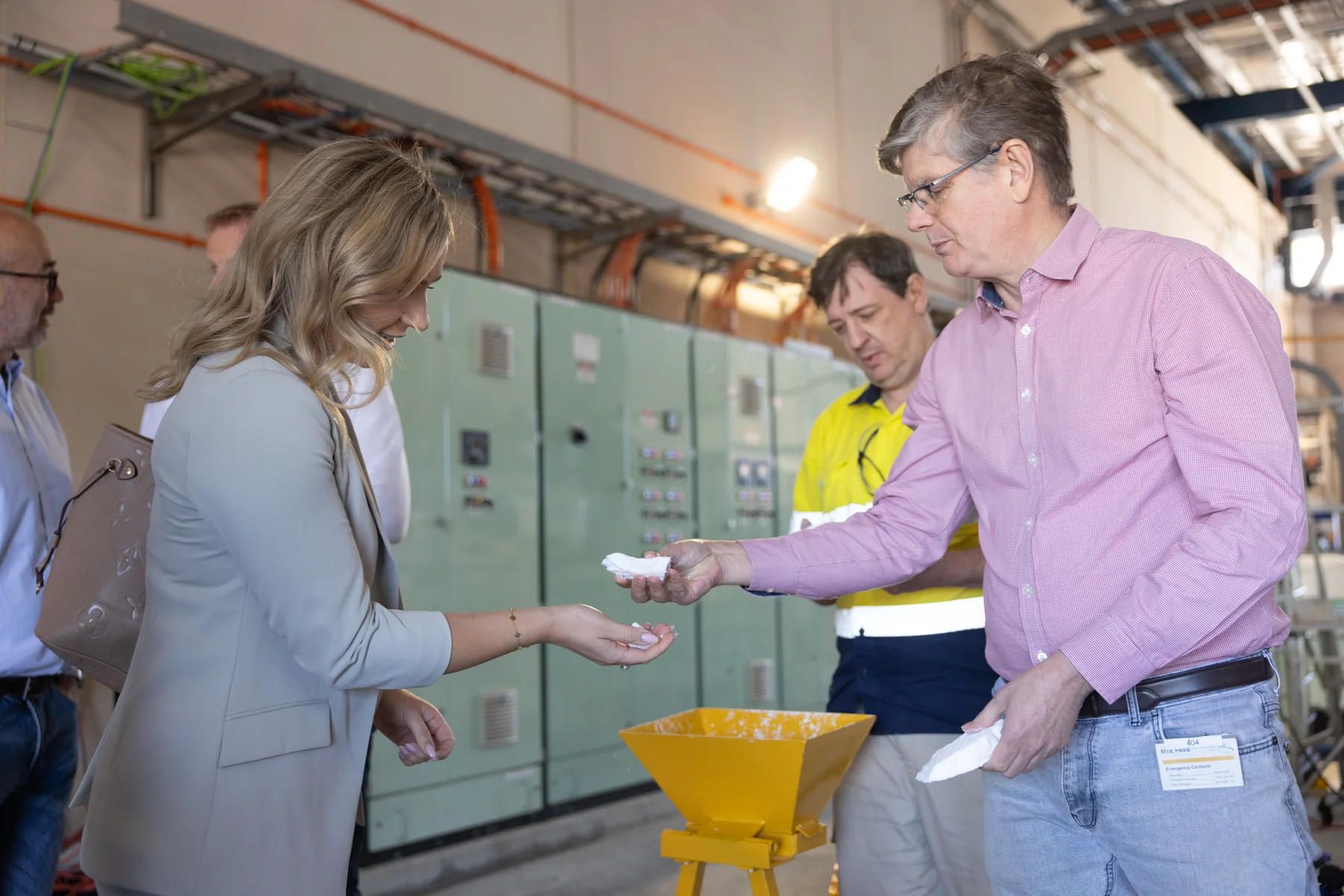
- Calcium: Reduced from 800–1,120 mg/L to 38–72 mg/L; recovered solids assayed at 97% calcium carbonate by weight. The recovered calcium carbonate can be used for on-site remineralisation of drinking water at the end of the desalination process.
- Magnesium: ADP's SWRO brine contains around 2,300 mg/L of magnesium. The MgCO₃ precipitation step removes approximately 60% of that, leaving ~970 mg/L. A second precipitation at pH 11 removes 99% of the remainder to below 7 mg/L, which is extremely effective value recovery from a previously ignored waste stream.
- Discharge compliance: Treated brine pH was lowered to regulator-acceptable levels using CO₂.
- Life cycle carbon footprint was independently assessed by Yordas Group, a 3E sustainability consultancy.
At a glance
- Site
- Adelaide Desalination Plant, Lonsdale, South Australia
- Material
- Seawater reverse-osmosis reject brine
- Pilot programme
- Four campaigns, March 2023–May 2025
- Pilot capacity
- 30 m³/day
- Minerals recovered
- Calcium carbonate, magnesium carbonate and magnesium hydroxide
- Calcium carbonate purity
- 97% by weight in recovered solids
- Oversight
- Environmental Protection Agency supervision
- Carbon assessment
- Independent life-cycle carbon-footprint assessment by Yordas Group